

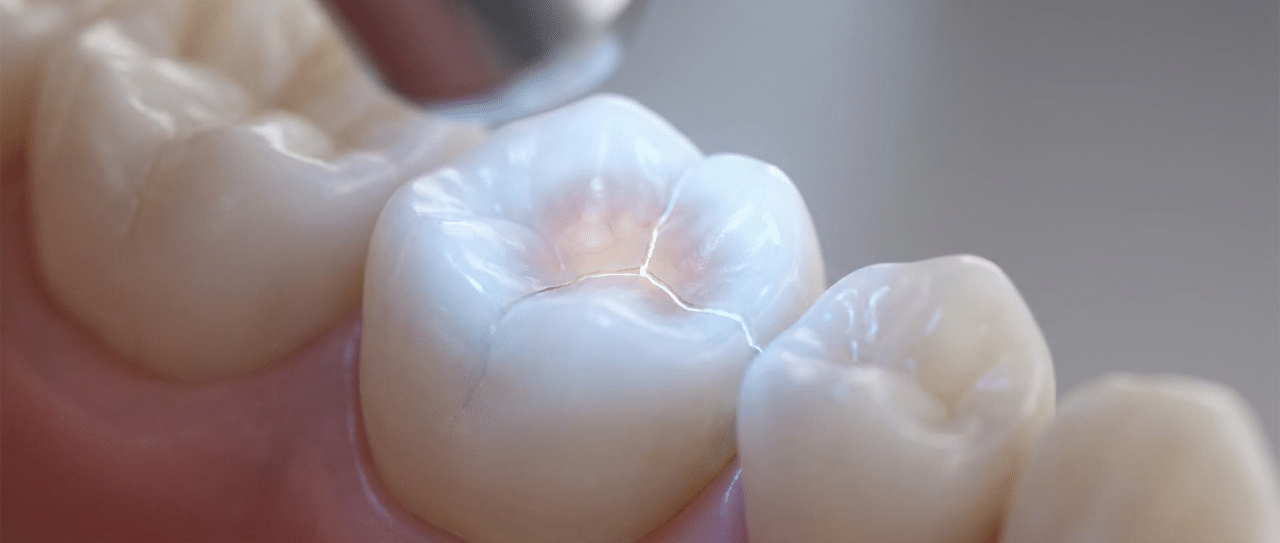
A broken tooth is still broken even if there is no pain. Those with broken teeth need to see a dentist to prevent infections and other complications.
Teeth can break in a sports accident or biting a pretzel. The initial feeling is a sharp pain but that may go away in a few hours. However, a broken tooth can cause other problems later because bacteria and infection can creep into the broken crevice.
Why a Broken Tooth Can Hurt Later, Not Now
Pain may not be present if the initial crack remains in the enamel. A shallow crack may not affect function immediately either.
1. Enamel (Outer Layer)
The outer layer is hard. It protects the teeth and has no nerves so you won’t feel it if it’s damaged. That is where the initial crack is and why you don’t feel pain.
2. Dentin (Middle Layer)
Dentin makes up the next layer. It is more sensitive and a crack that worsens may cause some tooth sensitivity to hot and cold foods.
3. Pulp (Deepest Layer)
The third and deepest layer is the pulp. It has all the blood vessels and nerves. A crack that reaches to the pulp will cause pain. It can also lead to infections from the bacteria reaching the tissues inside the tooth.
Symptoms may not appear right away, according to Verywell Health. That’s because cracks may only be in the enamel part of the tooth. Cracks can go deeper over time as you continue to chew and use your teeth. Pressure from chewing can make them worse.
⚠️ Those who think they have a cracked tooth should see a dentist, even if they think it’s no big deal.
Types of Fractures (And What Each Means)
Teeth breakage comes in five types of fractures. Each classifies the depth, pain, and type of treatment required to remedy the fractures, eliminate pain, and save the tooth.
1. Microfracture or Craze Fractures
These are tiny line fractures in the enamel. Most don’t cause any further problems but can be a cosmetic issue. They happen with normal teeth function or with bad habits like teeth grinding or pen chewing. Dentists find them through X-rays. Bonding often works for these fractures.
2. Fractured Cusp
This fracture happens when part of a tooth’s crown breaks. Sometimes, this happens around fillings. The break can reach to the gum line. Molars are usually where this type of break happens.
The damaged area becomes weaker even though remains unaffected. Dentists often recommend crowns or onlays to restore strength and prevent bacteria from entering deeper layers.
Delaying treatment increases the risk of further problems because the back teeth do most of the chewing.
3. Cracked Tooth
A cracked tooth is a fracture that starts at the top of the tooth and goes to the gum. However, it hasn’t reached the gum and doesn’t completely divide the tooth. Early detection can help save the tooth with a crown or a root canal to remove infection.
Chewing can cause pain and those with these types of fractures probably will have hot and cold teeth sensitivity.
Early treatment is the best option to save the tooth but you may need a root canal and a crown if the pulp is infected. Spear Education states early diagnosis is important because cracks can spread.
4. Split Tooth
A split tooth is a break that goes from top to bottom and divides the tooth into segments. It can happen in an accident but most often occurs when a cracked tooth goes untreated. A split tooth causes pain, gum swelling, possibly infection, and loose tooth sections. Teeth with this type of fracture must be removed.
Patients have pain, especially while chewing, and also experience gum swelling and an infection. Some sections of the tooth may be visible. This tooth usually cannot be saved and requires an extraction. Some cases allow for part of the tooth to be saved, but that depends on the fracture.
5. Vertical Tooth Fracture
Some may mistake this for a crack or split tooth but a vertical tooth fracture starts at the tooth root and goes up to the crown rather than the reverse. Mild pain may be the first symptom but it can include swelling and infection. In most cases, the tooth will need to be removed. Another possible option for some cases is for an endodontics.
The problem with this type of fracture is that early symptoms can be mild and inconsistent. There may be occasional pain and a little swelling but it goes away for a while. You may see a bump on your gum that keeps coming back. It looks like a pimple but it really drains infection. Sometimes, vertical root fractures remain undetected until pain from an infection forces the patient to go for an exam.
The tooth requires extraction in most cases. However, endodontics can save or a root-end procedures some teeth can be saved through endodontic treatment or a root-end procedure;
What Happens If You Wait
🚨 Don’t Delay Treatment
A fractured tooth will worsen and become more challenging to treat if you wait. Chewing will deepen the crack over time and that can result in infection and tooth loss. Waiting will also cost you more in dental bills because of more extensive procedures required.
An untreated broken tooth can become abscessed, result in a gum or bone infection, and pulp damage. You may not feel pain until it reaches the pulp or bone. A tooth fracture can lead to such severity that it must be pulled.
Those who don’t feel pain but think they may have a tooth crack from an incident should make a dental appointment, even if you have no pain. Some signs of a cracked tooth are visible cracks or jagged edges, tooth sensitivity, gum inflammation, and tooth discolouration.
Treatment in early stages is usually dental bonding. Other stages may require inlays, onlays, or crowns.
Cracked teeth can produce delayed symptoms because inflammation develops gradually, according to Verywell Health. The trend is for patients to ignore a potential problem until they have severe pain. By then, it may be too late to save the tooth.
Treatment in Early Stages
It is easier and more affordable to get early dental treatment when you think you may have fractured a tooth.
Dental Bonding
Dental bonding works well for minor cases of chips or craze lines. Bonding is made of composite resin that can be shaped and coloured to look just like your tooth. It offers both pleasing aesthetics and tooth protection. Bonding can help your tooth remain functional too.
Inlays or Onlays
Inlays or onlays are the answer for moderate fractures may require inlays or onlays. These are custom restorations that preserve more natural tooth structure than crown. They also provide strength to the tooth.
Crowns
Crowns work well for larger fractures often require crowns. A crown covers the entire tooth and prevents cracks from spreading. It also prevents bacteria from re-entering the tooth. They are used for root canals and for fractures where the bacteria haven’t reached to root..
Root Canals
Root canals are typically the solution for bacteria that have entered the pulp. A root canal involves drilling into the tooth to remove the infected pulp. The area is cleansed and the crown is placed.
Extractions
Extractions are recommended for severe fractures, split teeth, and many vertical root fractures. Missing teeth are replaced with dental implants, bridges, or partial dentures.
Protecting Broken Teeth Before Your Appointment
You can protect your broken tooth if you cannot get to dentist immediately. It is important to act quickly to reduce pain and save the tooth.
Use warm water to rinse your mouth, removing debris and keeping the area clean. Avoid using the affected side for chewing and choose softer foods until you can see the dentist.
You can pad irritating sharp edges in your cheek or on your tongue with dental wax. It is available at pharmacies and can temporarily cover the edges. Get over-the-counter pain medicine if there is discomfort.
FAQs
Have a Broken or Cracked Tooth?
Don’t wait until pain develops. Schedule an appointment with our team today for an evaluation and the best treatment plan to save your tooth.